If you've opened Ahrefs, Semrush or any backlink tool and found dozens of spam or "toxic" backlinks from sites you've never heard of, you're not alone. I found 34 of them pointing at this site.
davidfriend.io launched this year. I've done no link building. Yet my backlink report shows 36 referring domains, and 34 of them are spam: betting sites, pizza shops, podcasts and fake news sites, all linking to my homepage with the same keyword-stuffed anchor.
The short answer: these links can't hurt you, because Google has never indexed the pages they sit on. They're cloaked pages built to put an advert in your backlink report. Ignore them. Don't disavow them. And whatever you do, don't buy links from the people behind them.
Here's what they are, how they work, and why buying from this network is where the real risk sits.
What these spam backlinks look like
You'll recognise them by the pattern. In my report, every one of the 34 spam domains shared the same traits:
- The same anchor text: a long, keyword-stuffed string advertising cheap backlinks and a private blog network, with your domain dropped into the middle.
- The same URL path:
/all/776/33.htmlor/all/776/4.htmlon every site. - Around 3,000 outbound links per page. Your site is one line on a giant list.
- Unrelated domains: casinos, a pizza shop, a podcast, fashion, health, property, and names built to borrow trust, like forbesstories.com and theforbestimes.com.
- They keep coming. Mine started on 6 August, weeks after launch, and a new one appeared the morning I wrote this.
The only genuine links in my profile were from my own Search Principle site and a client's footer credit. Everything else was this.
Why you can't see the pages: cloaking
Try visiting one and you'll hit a wall. When I opened the page on bazerdaily.com that links to me, it didn't show a list of links. It redirected straight to a link-selling site, with a tracking tag on the end naming the spam domain that sent me. The site's homepage wouldn't load at all.
So how does a backlink tool see a link on a page that doesn't exist?
The page does exist. It just decides who gets to see it. This is cloaking: serving one version of a page to crawlers and another to people.
- Backlink crawlers (the bots behind Ahrefs, Semrush and similar tools) get the page with 3,000 links on it, so your site shows up in their database.
- Humans get redirected to wherever the operator makes money.
Backlink tools run their own crawlers. They record a link whether or not Google has ever indexed the page. That's why these links fill your report while the sites themselves are invisible. I checked Google for the one I'd opened: not a single page indexed.
Cloaking breaks one of Google's most basic spam policies. Remember that, because it matters in a moment.
Who's behind it, and how they make money
The target isn't Google. It's you.
That anchor text is an advert. It's written to appear in your backlink report, where you'll read it. New sites get hit hardest because new owners check their backlinks more than anyone.
Follow the trail and the business model is plain:
- Get your attention. Your domain appears in a link from a site with a decent-looking authority score.
- Send you somewhere. Click through and you're redirected to a site selling links. A tracking tag records which spam domain sent you.
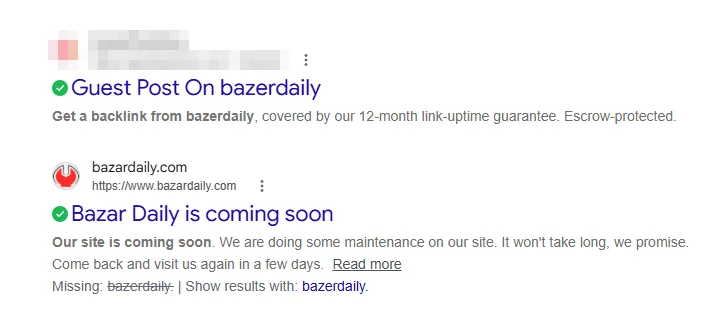
- Sell you the domain. Search for the domain's name and the site itself doesn't come up. A guest post marketplace ranks first instead, selling a post on it for about $25, with a "domain strength" of 74 out of 100.
The seller's pitch includes indexing: get a link, and if it doesn't get indexed, they replace it.
These look like expired domains bought for their leftover metrics. Third-party scores like DA and "domain strength" hang around after a site dies, which makes the domain easy to sell to anyone who trusts the number.
Will spam backlinks hurt your rankings?
The ones pointing at you, no. The ones you pay for, very possibly.
Links you didn't ask for: while these pages stay cloaked and unindexed, Google gives them no weight. No harm, and no value either. You didn't build them, you can't stop them, and they don't count.
Links you buy: this is where it goes wrong. Take that $25 post.
- If it stays unindexed, you've paid for nothing. The page is invisible to Google.
- If it does get indexed, which is exactly what the seller promises, you've paid for a link on a cloaked site built to sell links. Paid links and cloaking both break Google's spam policies. You're highly likely to end up with a penalty.
A penalty is not something you bounce back from in a month. Recovery takes at least a year, often several. Disavowing links afterwards won't fix it.
One quick test for any site selling a link: search for its name. A site Google won't show for its own brand is a site you should never pay to appear on.
How to check a site before you buy a link
You don't need any tools. Two Google searches tell you most of what you need. Don't click through to the site itself: that's what the operator wants.
- Check it's indexed. Search
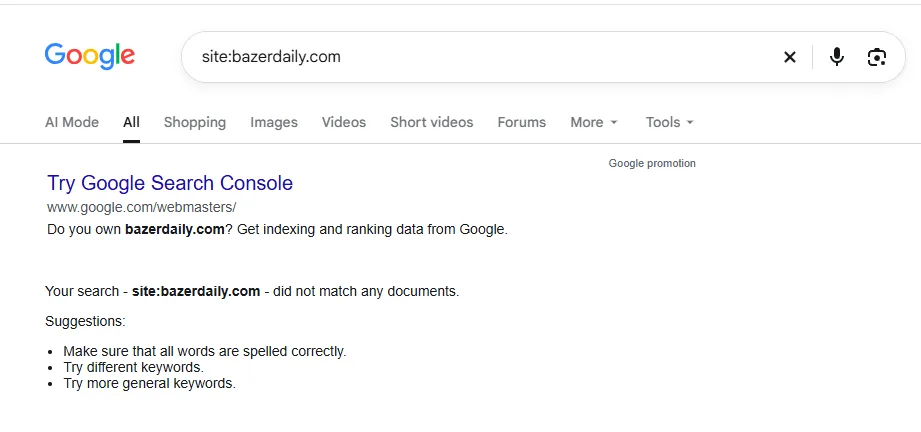
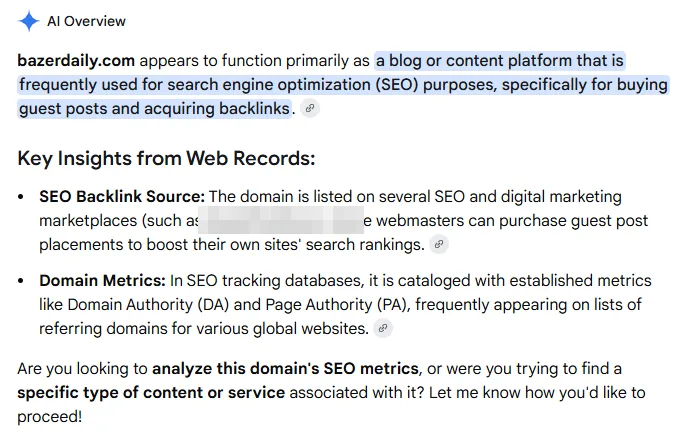
site:example.com, with no space after the colon. A real site lists its pages. bazerdaily.com, sold with a "domain strength" of 74, returns nothing at all. - Search its name. A real site comes up first for its own name. The one I tested doesn't: the top result is a marketplace selling a link on it. Even Google's AI Overview describes it as a domain used for buying guest posts and backlinks.
site:davidfriend.io lists every page on this site. That's what an indexed site looks like.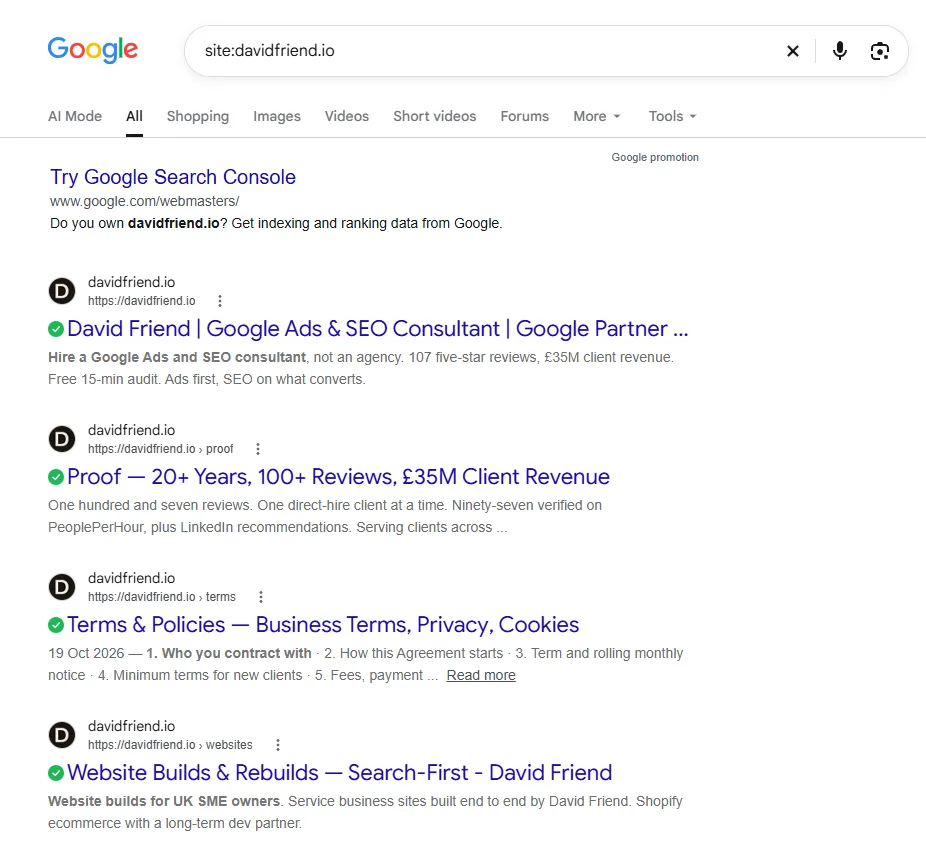
One trap: site: example.com with a space isn't a site search. It's an ordinary search for pages that mention the domain, so you'll see results even when the site has none indexed.
A high authority score on a domain with zero indexed pages isn't authority. It's a leftover number in a third-party tool.
What to do about them
- Ignore them. They're noise in a third-party tool, not a problem with your site.
- Don't disavow them. The disavow tool is for professionals dealing with a specific problem. Used without knowing exactly what you're doing, it can do more harm than the links ever would.
- Don't pay for a "toxic link clean-up" or disavow service. There's nothing here to clean up.
- Don't buy links from these networks, however good the authority score looks. DA and "domain strength" mean nothing on a site Google can't see.
- Don't click through. Every visit is tracked and tells the operator their bait works.
Had a list of sites to buy links on land in your inbox? Read Should you buy backlinks from a list someone sent you?
If you want links that count, they come from real sites with real readers: clients, partners, suppliers, and people who find your work useful enough to mention. It's part of the SEO work I do, and it's what gets you cited in AI answers too.
Frequently asked questions
Why do spam sites link to my website?
To get your attention. Your domain is placed in a link so it appears in your backlink report, and the anchor text works as an advert for link selling.
Should I disavow spam backlinks?
No. Unindexed, cloaked links carry no weight with Google. The disavow tool is for professionals, and using it without a clear reason can cause more harm than the links.
Why does Ahrefs show links I can't find?
Backlink tools run their own crawlers. Cloaked pages show the links to those crawlers and redirect people elsewhere, so the tool records a link you can't see.
Is it safe to buy a link on a high-DA site?
Not on these. A high score on a cloaked, unindexed domain means nothing. If the link does get indexed, you've paid for a link on a site built to break Google's rules.
The bottom line
If your link report is full of strange domains with "Buy Backlinks" in the anchor, nothing is wrong with your site. Someone is fishing for customers. Leave the links alone, don't pay anyone to clean them up, and never buy from the people who put them there.
I'll be writing more on how these networks work. If you're unsure whether something in your link profile needs attention, get in touch and I'll tell you straight.
Book a free 15-min call →